Quick Answer: C1S vs C2S Paper
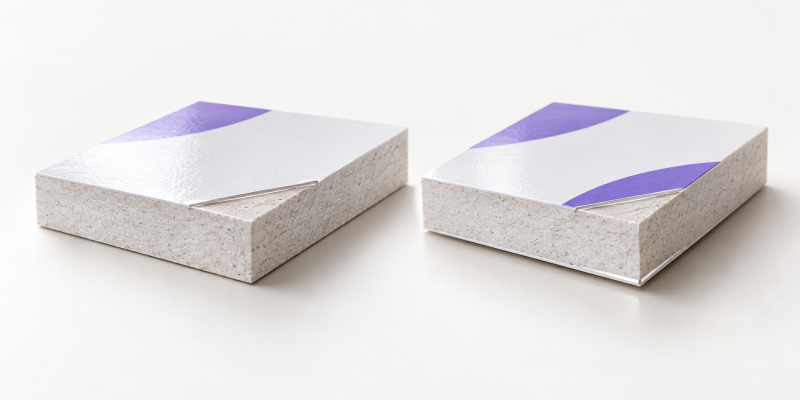
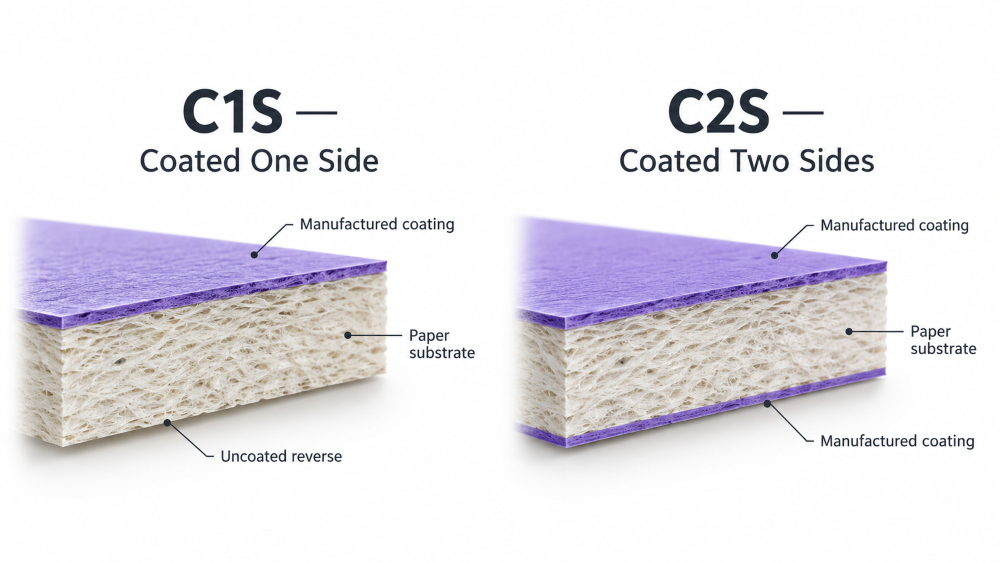
C1S (coated one side) paper has a coated printing surface on one side and an uncoated or differently treated reverse. C2S (coated two sides) paper has coated surfaces on both sides, providing more similar printing characteristics on the front and back.
Choose C1S when one side needs a coated appearance and the reverse serves a different purpose. Choose C2S when both sides need consistent, high-quality color printing.
Neither is universally better. The right choice depends on the design, intended use, and available production options.
C1S vs C2S Paper: Quick Comparison
| Feature | C1S Paper | C2S Paper |
|---|---|---|
| Coating | One side | Both sides |
| Front surface | Coated | Coated |
| Back surface | Uncoated or differently treated | Coated |
| Full-color printing | Optimized for coated face | Suitable for both faces |
| Front-to-back consistency | Different surface characteristics | More consistent characteristics |
| Handwriting | Reverse often more suitable | Depends on finish and instrument |
| Common applications | Tags, packaging, writable-back cards | Business cards, postcards, promotional pieces |
| Gloss or matte | Depends on grade | Depends on grade |
| Cost | Depends on specifications | Depends on specifications |
Important: C1S and C2S describe the manufactured paper coating, not thickness, gloss level, UV coating, or lamination.
What Is C1S Paper?
C1S stands for coated one side. A coating is applied to one face during paper manufacturing to improve surface characteristics such as smoothness, ink holdout, and printed-image reproduction. The reverse remains uncoated or receives a treatment specific to the paper grade.
The coated face is generally better suited to detailed graphics and controlled color reproduction. The reverse may provide a more natural paper feel and can be useful for handwriting, adhesive applications, or simpler printed information.
Advantages of C1S Paper
- Provides a coated surface for primary graphics.
- Offers different front and back surface characteristics.
- May be suitable for handwriting on the reverse.
- Works well when only one face requires detailed graphics.
- Supports specialized packaging and converting applications.
Limitations of C1S Paper
- Printed graphics can appear different on the two faces.
- The reverse may absorb or dry ink differently.
- Some grades have restrictions on reverse-side printing.
- Coating orientation must be considered during production.
Production consideration: An uncoated reverse is not automatically compatible with every printing process. Confirm that the selected paper grade supports the intended reverse-side application.
What Is C2S Paper?
C2S stands for coated two sides. Both faces receive a manufactured paper coating intended to provide improved printability and more similar surface characteristics. C2S is a practical choice for products with photographs, detailed graphics, or substantial branding on both sides.
Advantages of C2S Paper
- Provides coated printing surfaces on both faces.
- Supports detailed, full-color double-sided printing.
- Generally offers greater front-to-back visual consistency.
- Works well for double-sided promotional products.
- Is available in many commercial printing grades.
Limitations of C2S Paper
- Handwriting performance depends on the coating and writing instrument.
- Additional finishing can reduce writability.
- Not every application needs coating on both sides.
- Coated surfaces do not guarantee identical printed appearance.
Five Key Differences Between C1S and C2S Paper
1. Coating Configuration
C1S has one coated face and a different reverse surface. C2S has coated surfaces on both faces. These coatings are part of the manufactured paper and are separate from finishing operations such as UV coating or lamination.
2. Printing and Color Reproduction
Coated surfaces generally support controlled ink holdout and sharper-looking printed detail. On C1S paper, the two faces may reproduce ink differently. C2S provides more similar printing surfaces and is generally better suited to designs requiring substantial graphics on both sides.
Actual color reproduction still depends on the stock, printing process, artwork, and production conditions.
3. Writing and Stamping
The reverse of many C1S grades can be more receptive to handwriting than a smooth coated surface. This may be useful for postcards, hang tags, greeting cards, and similar products. However, neither designation guarantees writability. Performance depends on the paper, writing instrument, ink, and any additional finishing.
When handwriting or stamping is essential, test the intended stock and instrument before production. A fully uncoated paper may also be appropriate.
4. Appearance and Surface Feel
C1S intentionally provides different front and back surface characteristics. C2S generally offers a more consistent appearance and feel on both faces. Neither designation determines whether the paper is glossy or matte. Coated papers are manufactured in multiple surface grades, and additional finishing can alter their appearance.
5. Finishing and Converting
Both C1S and C2S can be compatible with cutting, folding, scoring, die-cutting, and other converting processes. Compatibility depends on the actual paper grade, grain direction, caliper, coating, and finishing requirements.
Do not assume that C1S always bonds better with adhesives or that C2S is harder to fold. Each application requires an appropriate material and production specification.
When Should You Choose C1S Paper?
C1S is worth considering when the two faces serve different purposes.
- Product tags: A coated front can display branding while a suitable reverse accepts handwritten details.
- Greeting cards: The exterior can carry printed artwork while the interior provides space for writing.
- Packaging: Some folding cartons use coated-one-side board for exterior graphics.
- Promotional cards: A coated front can present the primary design while the reverse carries simpler information.
Choose C1S when one side carries most of the visual design, the reverse needs different properties, and a compatible grade is available.
When Should You Choose C2S Paper?
C2S is generally a strong candidate when both faces carry substantial printed information or graphics.
- Business cards: Detailed artwork and branding on both sides.
- Postcards: Full-color graphics across both faces.
- Rack cards: Photographs and promotional information on both surfaces.
- Booklet covers: Graphics on exterior and interior faces.
- Promotional inserts: Double-sided advertising or product information.
Choose C2S when consistent double-sided printing matters and the available stock and finishing options support the design.
Cost and Production Considerations
Is C1S Cheaper Than C2S?
Not necessarily. Having a coating on only one side does not guarantee a lower price. Actual production cost depends on paper grade, weight, caliper, sheet dimensions, availability, quantity, printing requirements, finishing, and production efficiency.
A readily available C2S stock may be more economical for a particular job than a specialized C1S grade.
How Does Wholesale Production Affect the Choice?
Standardized paper and product specifications can support efficient production, particularly when multiple jobs share press capacity through gang-run printing. ND4C uses gang-run production for many standard catalog products. Available stock and finishing combinations depend on the specific product being ordered.
The most practical approach is to evaluate the available catalog options before specifying a specialized stock.
What If the Required Stock Is Not Available?
C1S and C2S availability varies by printer, product, and paper grade. If a project requires a stock not shown among the available product options, contact the printing provider before committing to the specification.
Specialty stock availability, minimum quantities, production compatibility, and pricing must be confirmed individually. A custom estimate may be possible, but availability is not guaranteed. For ND4C orders, begin with the available catalog specifications and contact customer support about requirements outside those options.
Practical Printing Scenarios
| Customer Requirement | Starting Recommendation | Reason |
|---|---|---|
| Full-color business card on both sides | C2S | Consistent coated printing surfaces |
| Hang tag requiring handwriting | C1S | Potentially more writable reverse |
| Postcard with photography on both sides | C2S | Double-sided graphics |
| Greeting card with handwritten interior | C1S or uncoated | Writing performance |
| Folding carton with printed exterior | C1S | Coated exterior |
| Promotional card with gloss finish on both sides | C2S with compatible finishing | Double-sided printing and finishing |
These recommendations are starting points, not guarantees of product availability.
Key Takeaways
- C1S means coated one side; C2S means coated two sides.
- C1S provides different surface characteristics on the front and back.
- C2S generally makes more sense for detailed double-sided color printing.
- An uncoated reverse may be more writable, but testing is important.
- Neither designation determines thickness, gloss level, or UV finishing.
- Neither stock configuration is automatically less expensive.
- Choose based on end use, available specifications, and production compatibility.
Frequently Asked Questions
What does C1S mean in printing?
C1S means coated one side. The paper has a manufactured coating on one face, while the reverse is uncoated or differently treated.
What does C2S mean in printing?
C2S means coated two sides. Both faces have a manufactured coating designed to improve their printing characteristics.
Can you print on both sides of C1S paper?
Yes, when the paper grade and printing process support reverse-side printing. Results may differ between the coated and uncoated faces.
Is C2S paper glossy on both sides?
Not necessarily. C2S describes the coating configuration, not the gloss level. Both gloss and matte coated grades are available.
Is C1S paper better for writing?
The uncoated reverse of a suitable C1S sheet is often more receptive to handwriting than a smooth coated surface. Actual performance varies.
Can you write on C2S paper?
Yes, but some pens and inks may smear or dry slowly. Test the intended writing instrument and finished surface.
Is C1S thicker than C2S?
No. Both configurations are available in different paper weights and calipers. Coating configuration alone does not determine thickness.
Which is better for business cards?
C2S is generally a practical choice for business cards with detailed graphics on both sides. C1S may be appropriate when the reverse requires different surface properties.
Which is better for postcards?
C2S is well suited to double-sided graphics. C1S may be considered when a writable reverse is important, subject to availability and mailing requirements.
Is C1S the same as uncoated paper?
No. C1S has one coated face. Fully uncoated paper has no comparable manufactured coating on either face.
Is C2S the same as UV coating on both sides?
No. C2S refers to the coating applied during paper manufacturing. UV coating is a separate finishing process.
Is C1S cheaper than C2S?
Not always. Actual cost depends on the available grade, quantity, product specifications, and production requirements.
Can C1S paper be laminated?
Yes, when the selected grade and lamination process are compatible. Adhesion and finishing requirements must be verified.
Does C2S guarantee identical printing on both sides?
No. Although C2S generally provides more similar surfaces, printed results can still vary with paper construction, artwork, production conditions, and finishing.