PRINT PLAYBOOK GUIDE - PRINT COMPARISONS
Part of Series: Print Comparisons
UV Coating vs Lamination: Differences & Best Uses
 ND4C Print Experts
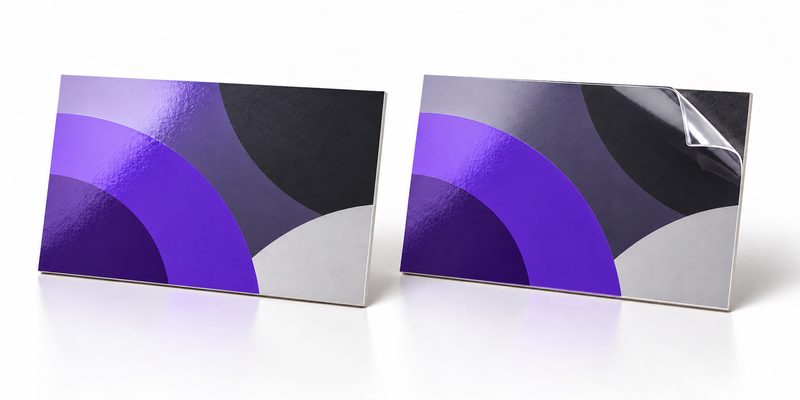
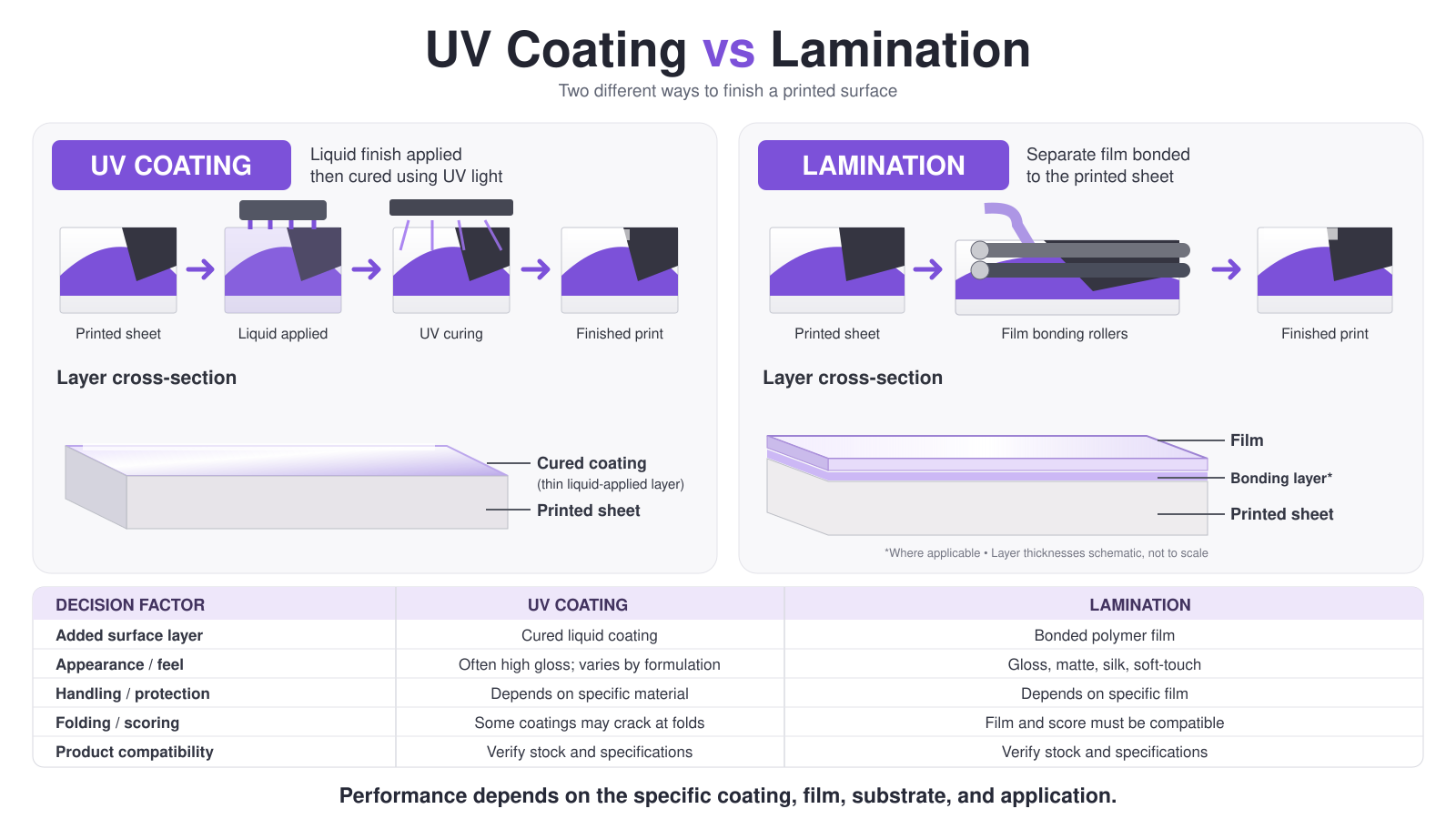
UV coating is a liquid finish cured with ultraviolet light. Lamination bonds a thin film to the printed surface. Both improve appearance and provide surface protection, but they differ in flexibility, feel, and finishing requirements. Choose UV coating primarily for its surface appearance, especially high gloss; consider lamination when a particular film texture or handling characteristic matters.
Quick answer: The best option depends on the paper stock, intended use, and compatible finishing specifications. Neither finish is universally better.
Quick Comparison: UV Coating vs Lamination
| Feature | UV Coating | Lamination |
|---|---|---|
| Application | Liquid cured with UV light | Film bonded to printed material |
| Appearance | Commonly high gloss; other effects available | Gloss, matte, silk, soft-touch |
| Protection | Depends on coating formulation | Depends on film and adhesive |
| Thickness | Adds minimal thickness | Adds a film layer |
| Flexibility | May crack at folds | Compatible films can accommodate folding |
| Handling | Suitable for routine use | Often selected for frequently handled pieces |
| Writing | Generally difficult | Generally difficult |
| Moisture resistance | Limited surface protection | Can improve moisture resistance |
| Typical uses | Business cards, postcards, promotional pieces | Covers, menus, presentation materials |
Actual performance depends on the materials, application, and production process.
What Is UV Coating?
UV coating is a liquid finish applied to printed material and hardened using ultraviolet light. High-gloss UV coating creates a reflective surface that can emphasize colors, photographs, and graphics. It is commonly used on business cards, postcards, and other promotional materials.
- Full UV coating (flood UV): Covers the intended printed surface.
- Spot UV: Applies coating selectively to highlight specific design elements.
UV coatings can also produce other surface effects, depending on the formulation and equipment. For selective coating applications and artwork requirements, see Spot UV Printing: How It Works and How to Prepare Your Files.
What Is Lamination?
Lamination bonds a thin film to printed material, creating a separate protective surface layer. Different films provide different appearances and handling characteristics.
- Gloss lamination: A reflective, shiny surface.
- Matte lamination: A subdued, low-reflection appearance.
- Silk lamination: A smooth finish with subtle sheen.
- Soft-touch lamination: A distinctive velvety feel.
Actual appearance and performance depend on the selected film. Lamination is often considered for presentation covers, premium marketing materials, and repeatedly handled products.
Five Key Differences
1. Appearance and Feel
UV gloss coating produces a reflective surface that can increase perceived color depth and contrast. Gloss lamination can achieve a similar appearance, while matte, silk, and soft-touch films provide more subdued or tactile alternatives. Physical samples are useful when appearance is a major purchasing consideration.
2. Protection and Durability
Both finishes provide surface protection, but neither is universally more durable. UV coating can help resist routine rubbing and handling. Lamination adds a film that may protect against particular types of wear. Performance varies by formulation: standard matte film, for example, may show marks more readily than a film designed for scuff resistance.
Important: Neither finish should automatically be considered waterproof, scratchproof, or suitable for outdoor use. Evaluate the specific materials and conditions.
3. Folding and Flexibility
Some UV coatings may crack when folded or sharply creased. Appropriate laminating films can offer flexibility, but lamination does not eliminate folding problems. Film separation, wrinkling, or cracking in the underlying paper can still occur. Paper thickness and grain direction, coating or film formulation, scoring, and fold construction all matter.
4. Writing and Additional Finishing
UV-coated and laminated surfaces can be difficult to write on with ordinary pens. Both finishes may affect later printing, adhesive bonding, foil stamping, or other operations. For handwritten postcards or additional addressing, consider an untreated surface or verify compatibility in advance.
5. Moisture Resistance
Lamination can improve resistance to incidental moisture, but exposed edges and underlying paper can still absorb water. UV coating offers some surface protection but is not waterproof. For frequent spills, cleaning, or moisture, a suitable synthetic stock or specialized construction may be more appropriate.
When Should You Choose UV Coating?
- A high-gloss appearance is desired.
- The product is primarily flat.
- Routine handling protection is sufficient.
- The selected stock and product support the coating.
- No incompatible secondary finishing is required.
Example: Promotional postcards. A reseller orders postcards with colorful product photography for a short-term campaign. Full UV gloss may suit the job because visual impact is the primary objective.
When Should You Choose Lamination?
- A particular film texture or appearance is desired.
- The product will receive frequent handling.
- Additional film protection is beneficial.
- The project requires a compatible flexible finish.
- A tactile experience is important.
Example: Presentation covers. Silk or soft-touch lamination may deliver the required feel for repeatedly handled presentation covers. If resistance to marking is critical, evaluate the particular film.
UV Coating vs Lamination: Which Costs More?
Neither finish is consistently less expensive. Compare complete job specifications, including:
| Factor | Cost consideration |
|---|---|
| Quantity | Setup costs and production efficiency |
| Paper stock | Compatibility with the finish |
| Application | One-sided versus two-sided finishing |
| Materials | Coating formulation or film type |
| Equipment | Available production and finishing processes |
| Additional finishing | Scoring, folding, trimming, or assembly |
| Turnaround | Scheduling and processing requirements |
UV coating may be economical in some production configurations. Lamination may justify additional processing when film characteristics are required. Evaluate total cost rather than comparing the finishing line item alone.
ND4C Finishing Options
ND4C offers full UV gloss coating, spot UV, matte, silk lamination, and soft-touch finishing options. Availability depends on the product and its specifications. Compatible finishes appear in the standard catalog; if the required option is not listed, request a custom estimate.
Practical Examples
| Project | Finish to consider | Primary reason |
|---|---|---|
| Promotional postcard | UV gloss | Reflective appearance |
| Premium business card | UV gloss or lamination | Desired look and feel |
| Presentation cover | Silk or soft-touch lamination | Smooth or tactile finish |
| Folded brochure | Compatible coating or film | Fold performance |
| Frequently handled menu | Suitable laminate or synthetic stock | Handling and moisture needs |
| Writable appointment card | Untreated writing area | Pen compatibility |
These are general recommendations; final choices depend on product specifications.
Key Takeaways
- UV coating is a cured liquid finish often chosen for high gloss.
- Lamination adds a bonded film and offers various visual and tactile finishes.
- Neither guarantees waterproofing or scratch resistance.
- Folding, writing, handling, and later finishing can determine compatibility.
- Compare stock, quantity, intended use, and total production requirements.
Bottom line: Choose UV coating when its surface appearance meets the job's needs. Choose lamination when a film finish or handling characteristic offers a meaningful advantage.
Frequently Asked Questions
Is UV coating the same as lamination?
No. UV coating is a liquid cured with ultraviolet light; lamination bonds a separate film to the print.
Which is more durable?
It depends on the material and type of wear. Some films suit frequent handling; UV coatings can protect routine print applications.
Is UV coating waterproof?
No. It protects the surface but does not make paper waterproof.
Is laminated paper waterproof?
Not necessarily. Edges and underlying paper remain vulnerable.
Can UV coating crack when folded?
Yes. Coating formulation, stock, grain direction, and scoring affect the risk.
Can laminated printing be folded?
Yes, with compatible materials and scoring. Lamination does not eliminate cracking or separation.
Does UV coating make colors brighter?
High gloss can increase perceived depth and contrast. Results depend on artwork, ink, and paper.
Do gloss lamination and gloss UV look identical?
No. Their sheen, surface texture, and feel may differ.
Can you write on these finishes?
Usually not easily with ordinary pens. Use an untreated writing area or test the instrument.
Is UV coating cheaper?
Sometimes. Quantity, materials, equipment, and finishing determine the cost.
Can UV coating and lamination be combined?
Yes, in compatible specialty processes. Film, coating, and adhesion must work together.
Do business cards need lamination?
No. Choose according to appearance, handling, stock, and available options.
Which is better for menus?
Evaluate the substrate and finish together, especially if cleaning or moisture is expected.
What is full UV versus spot UV?
Full UV covers the designated surface; spot UV highlights selected areas.
Does lamination add thickness?
Yes. Film and adhesive add thickness according to the specification.
Related Print Playbook Guides
ND4C is a wholesale trade printer with more than two decades of industry experience. Our Print Playbook guides draw on firsthand expertise across prepress, production, customer support, design, and print technology to help retail printers and print resellers make better production decisions.